Salkantay Trek Camera Gear: Why I Left My Nikon Z8 at Home
I’m a professional photographer.
So when I set off on the trip of a lifetime, walking the Salkantay Trek to Machu Picchu, you might expect my best camera to come with me.
It didn’t.
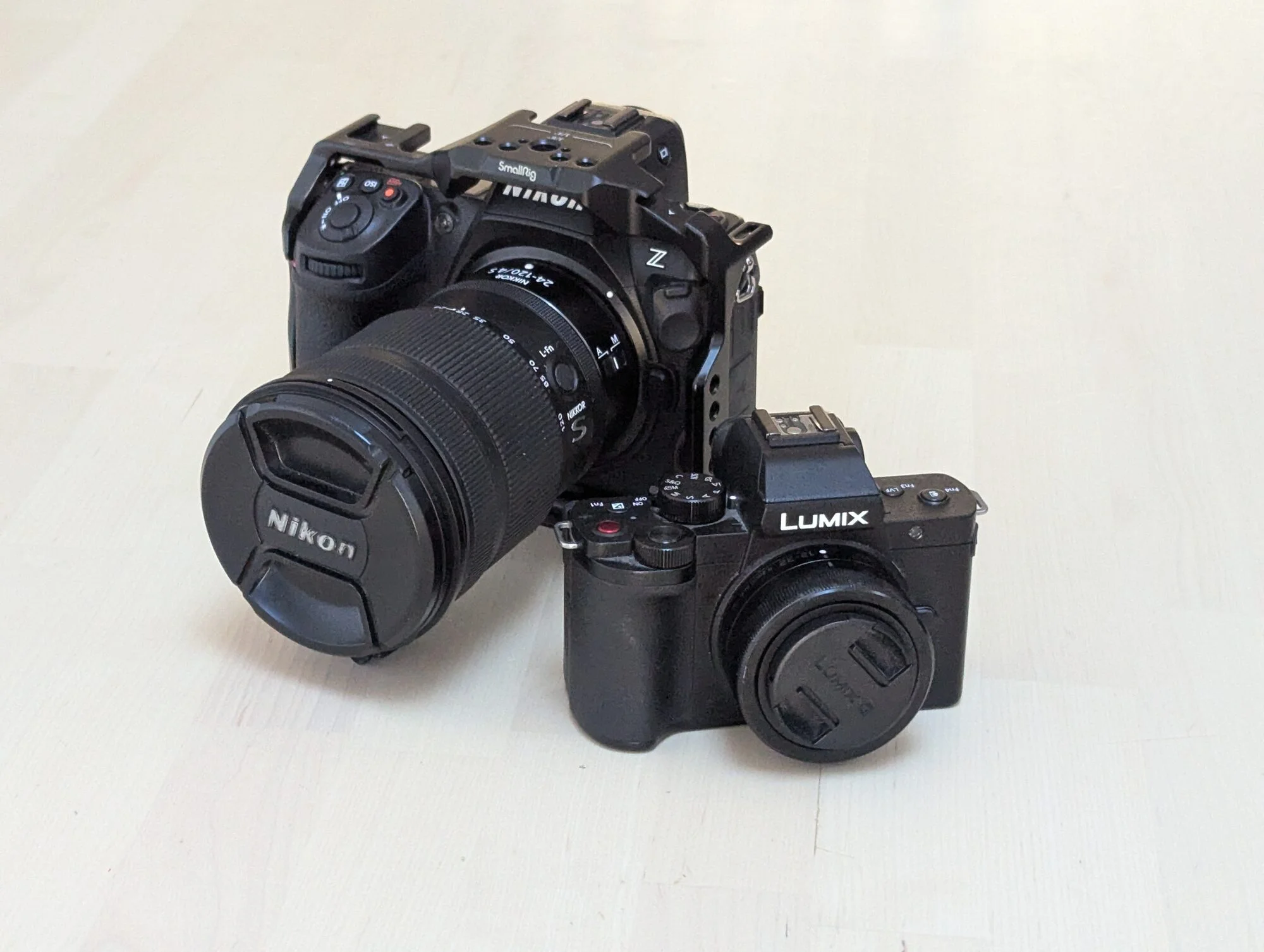
My Nikon Z8 stayed at home in Plymouth, and I took a small Lumix G100 instead.
This is why I made that choice, how it worked out, and where my phone camera fell short.
For the full route and what each day was really like, read my Salkantay Trek to Machu Picchu: My Honest First-Hand Guide.
My Salkantay Camera Gear at a Glance
| Nikon Z8 | Lumix G100 | Google Pixel 7 | |
|---|---|---|---|
| Why I’d choose it | My main professional camera | Small, light and built to take photos | Always in my pocket |
| On the trek | Stayed at home | Came along every day | Came along, for quick snaps |
Why Didn’t I Take My Nikon Z8?
There were two reasons.
The first was weight.
Every walking day, everything I needed went in my daypack. A typical load was a waterproof jacket, a warm layer, hat and gloves, two litres of water, snacks, sun cream, my phone, a power bank and a camera.
Everything else travelled between our stops in a duffle with a 6 kg limit, so the daypack was the only place for a camera while walking.
Over five days of mountains, cloud forest and long descents, every extra bit of weight adds up.
The second was risk.
On a trek, a camera can be dropped, knocked or crushed in a bag. My Z8 would cost around £5,000 to replace.
And the Salkantay Trek isn’t gentle on equipment. The climb to Humantay Lake was loose shale that moved under your boots. Day 4 started with the Gringo Killer, a long climb out of the valley on uneven steps, followed by a substantial descent.
On ground like that, I wanted to be concentrating on where I put my feet, not on protecting an expensive camera.
That’s a lot of worry to carry up a mountain.
Why Did I Take the Lumix G100?
I originally bought the G100 for vlogging.
That never really went anywhere.
These days I mainly use it to record short video clips at weddings, so it rarely gets a chance to take centre stage.
This trip gave it a proper job.
I wanted a camera that could still document the journey properly, without adding the weight of my usual professional setup to everything I was already carrying.
I used the 12–32mm lens that came with the camera.
It’s small enough to stay to hand rather than buried in my rucksack, and light enough to carry all day.
By the time we reached Rainbow Mountain on Day 6, I was particularly pleased with that. When you’re tired and walking at altitude, even small differences in what you’re carrying start to matter.
And if anything had happened to it, it wouldn’t have been a £5,000 problem.
“The Best Camera Is the One That’s With You”
When I was learning my craft, I followed the photographer Chase Jarvis almost every week, through his blog posts and YouTube videos.
He used to say, “the best camera is the one that’s with you.”
He was hinting at mobile phones, and it’s still true today.
Phone cameras can take amazing photos. If your phone’s to hand and you need a quick snap, it’s perfect.
For me, on the Salkantay Trek, the camera that was with me was the G100.
I’m Not a Landscape Photographer
This might sound strange from someone who spent a week in the Andes.
But landscape photography is its own craft.
It often means setting up a tripod, getting my Lee ND filters out to balance the light, and taking time to work on the perfect composition.
On the trek, I didn’t have that time.
I also didn’t want to carry all that extra kit for miles every day.
So I shot as I walked.
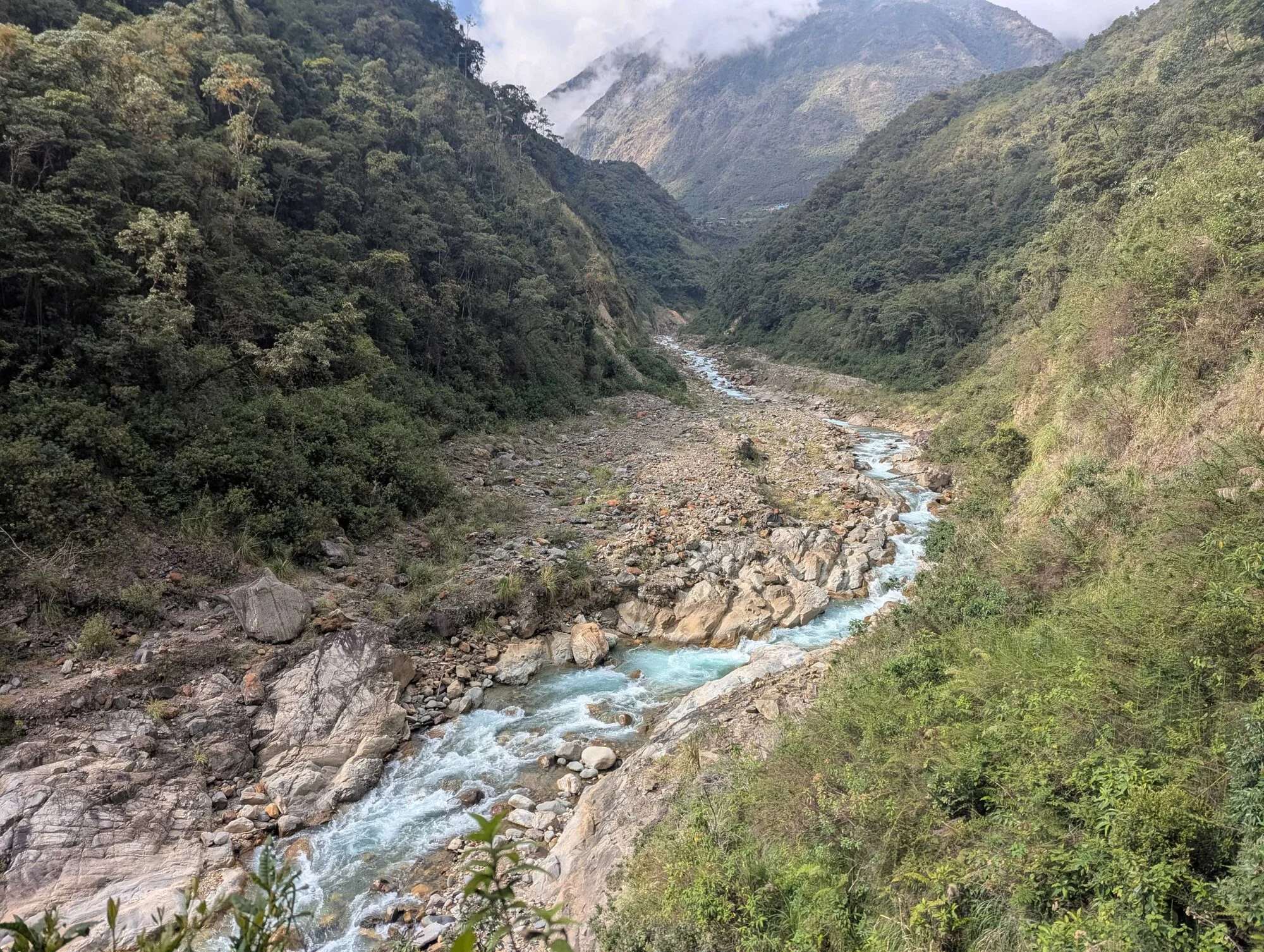
On the morning we climbed to Salkantay Pass, the light started catching the snow-covered mountains and the domes below them began to glow. There was no time to set anything up, just time to take the photo.

Camera or Phone: Where Did the Pixel 7 Fall Short?
My phone is a Google Pixel 7.
To be fair to it, it takes good images even a few years on.
But phones have shutter lag, so taking several photos quickly doesn’t work as well.
Otherwise you end up with motion photos, where the phone records a short video and freezes on the moment you wanted.
It’s just not the same.
When I wanted several shots quickly, the Lumix won hands down.
It’s a camera. It’s designed to take photos, and it will do that all day long.
That’s especially true with people, who rarely stay still for long.

Not every photo from the trip came from the G100. Some were taken on my phone, when it was the camera that was with me. But most of my photos at Machu Picchu were taken on the G100.
What Cameras Did Other Walkers Carry?
I saw GoPro’s and DJI Osmos clipped to rucksacks, and a few SLRs, but fewer than you’d expect.
Mostly, people used their phones.
I think that’s down to how technology has changed. Generations have grown up with phones and selfies, so that’s what people are used to.
Phones also give instant results, and you can share online straight away.
The irony on the Salkantay Trek is that, for much of the route, there was little or no mobile signal. My phone only became properly useful again towards the end of Day 4, as we walked towards Aguas Calientes or at our overnight accommodation on the WiFi.
There’s nothing wrong with using a phone. For a lot of walkers, it’s all they need.
Practical Tips for Photographing the Salkantay Trek
These are the things that worked for me.
Keep your camera accessible
A camera buried at the bottom of a rucksack doesn’t take many photos.
The G100 lived in my Osprey Talon 26 daypack, along with my phone and power bank, where I could reach it quickly.

Carry a power bank
Power was available through the day at most of our accommodation. The exception was the remote first Sky Camp, where it was only available from roughly 5pm to 8pm during our stay.
My power bank kept both my phone and camera charged.
Keep valuable kit in your hand luggage
On the flights, my camera and laptop stayed in my hand luggage.
That mattered when my checked bag didn’t arrive in Cusco with me after our connection in Colombia. The bag turned up the following day, but if my camera had been inside it, I’d have spent those first days in Peru without it.
I’d keep anything I couldn’t easily replace in my hand luggage again.
My laptop then stayed in storage during the trek.
Stop and look back
A camera is a good excuse to stop.
On the climb to Humantay Lake, stopping for a photo was also a very convenient way to catch my breath.
At Rainbow Mountain, stopping to take photos gave me a reason to slow down at altitude.
It also made me look at the landscape around me, rather than focusing only on reaching the viewpoint. Some of my favourite views there weren’t of Rainbow Mountain at all, but of the snow-covered peaks around it.

For everything else I carried, read my Salkantay Trek packing list.
Don’t just photograph the famous views
Some of my favourite photos were the quiet ones.
The domes glowing before sunrise.
Mist in the valleys.
People walking ahead of me on the trail.
Those photographs tell the story of the journey far better than the postcard views. Don’t become so focused on recreating the photograph everybody else has taken that you forget to look behind you.
Does Your Camera Define You as a Photographer?
Looking back, leaving the Z8 at home was the right decision.
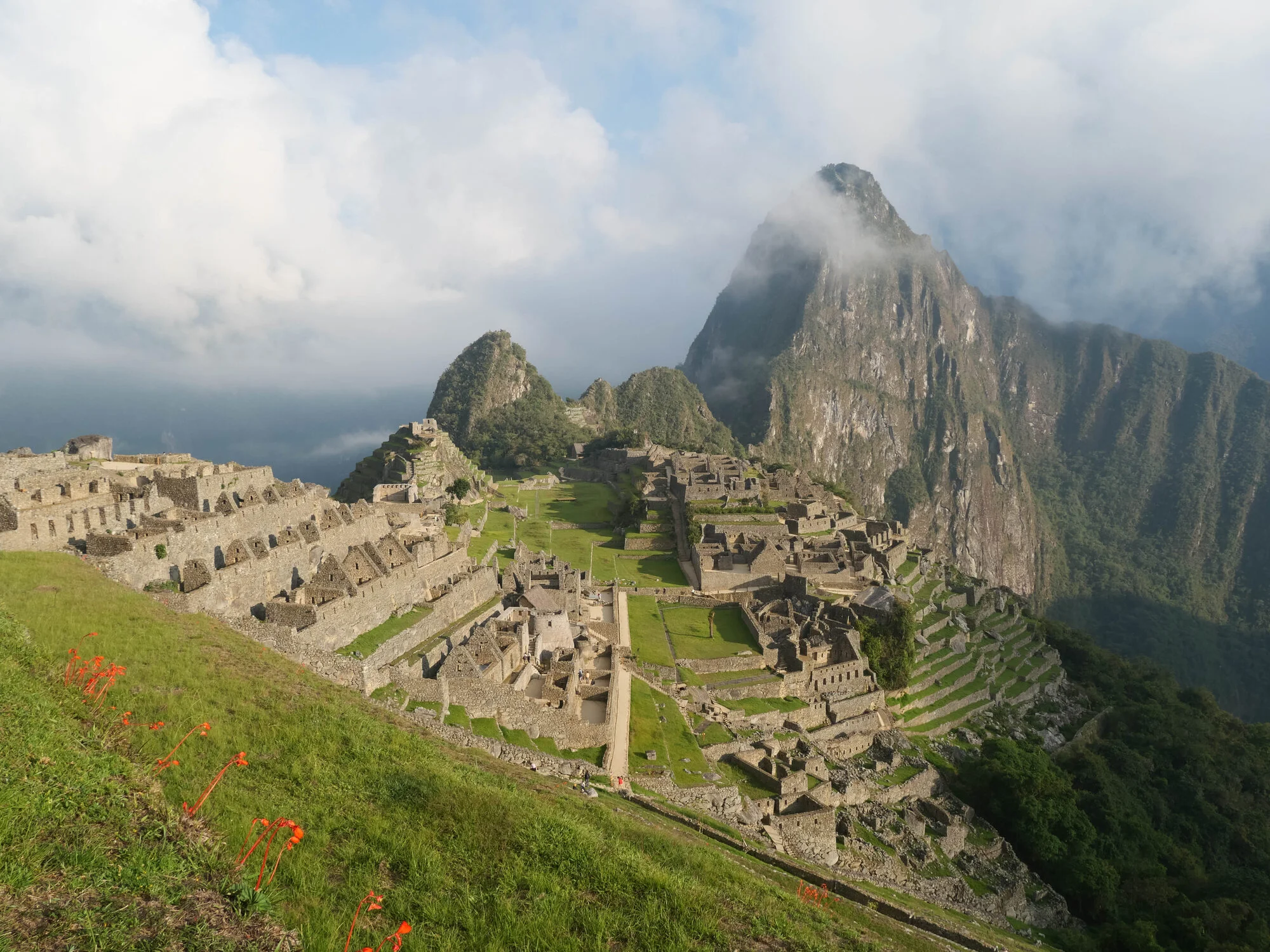
When we reached Machu Picchu, cloud was moving across the site and the early morning light was breaking through. As a photographer, it was exactly the sort of changing light I’d hoped for.
There are millions of photographs of Machu Picchu. But taking your own after walking there for days makes it mean something completely different, whatever camera you use.
Cameras like the Nikon Z8 still have a place in creativity and photography.
But they no longer define you as a photographer.
What matters is being there, seeing the moment, and having a camera with you when it happens.
On the Salkantay Trek, that was a small Lumix G100 I’d originally bought for vlogging.

Read the complete journey:
Salkantay Trek to Machu Picchu: My Honest First-Hand Guide
Find out why our group took on the challenge:
Why I Walked to Machu Picchu for Plymouth Charity HD Livin
See everything else I packed:
Salkantay Trek Packing List: What I Actually Used
And the final adventure of the week:
About Mike Lister
A Devon-based photographer specialising in weddings, commercial work, and drone photography. With years of experience capturing life's most important moments, Mike brings warmth, professionalism, and artistic vision to every project.
Learn more about Mike