Salkantay Trek Packing List: What I Actually Used
Packing for the Salkantay Trek to Machu Picchu was more complicated than packing for an ordinary walking holiday.
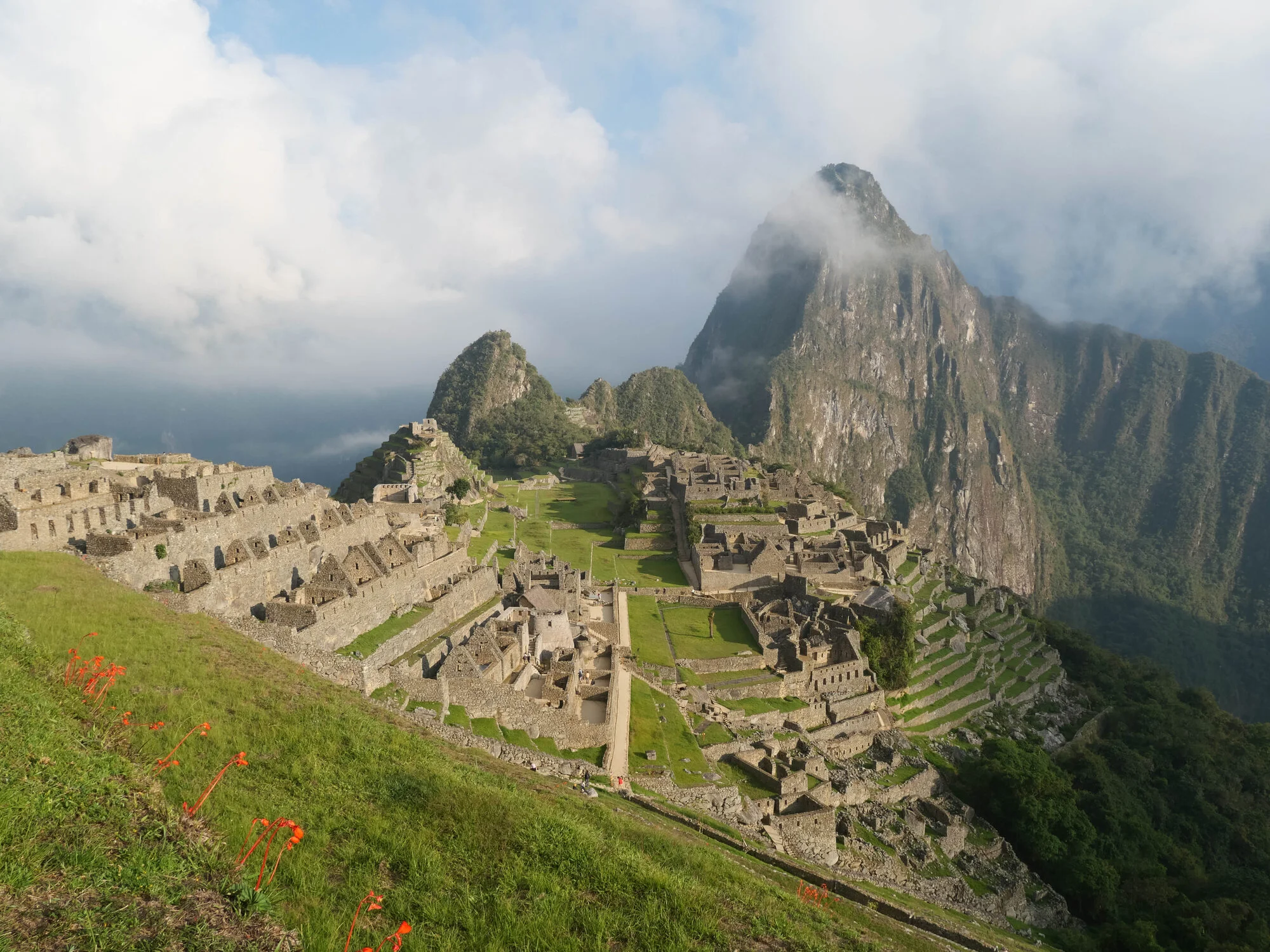
Over five days, we moved from cold high-altitude camps and the 4,630-metre Salkantay Pass into warmer cloud forest, jungle trails and the final railway walk to Aguas Calientes.
I needed clothing for changing conditions, but everything carried between our accommodation had to fit inside an operator-issued duffle with a 6 kg weight limit. Anything I wanted while walking had to go in my daypack.
This is the kit I actually took to Peru in October 2026, what I used most, what stayed in my bag and what I would change if I packed for the Salkantay Trek again.
It is not a list of products everyone needs to buy. Other walkers in our group made different choices, including walking in shorts or using much smaller bags. This is simply what worked for me.
For the full route and my experience of each day, read my first-hand Salkantay Trek to Machu Picchu guide.

My Salkantay Trek Packing List at a Glance
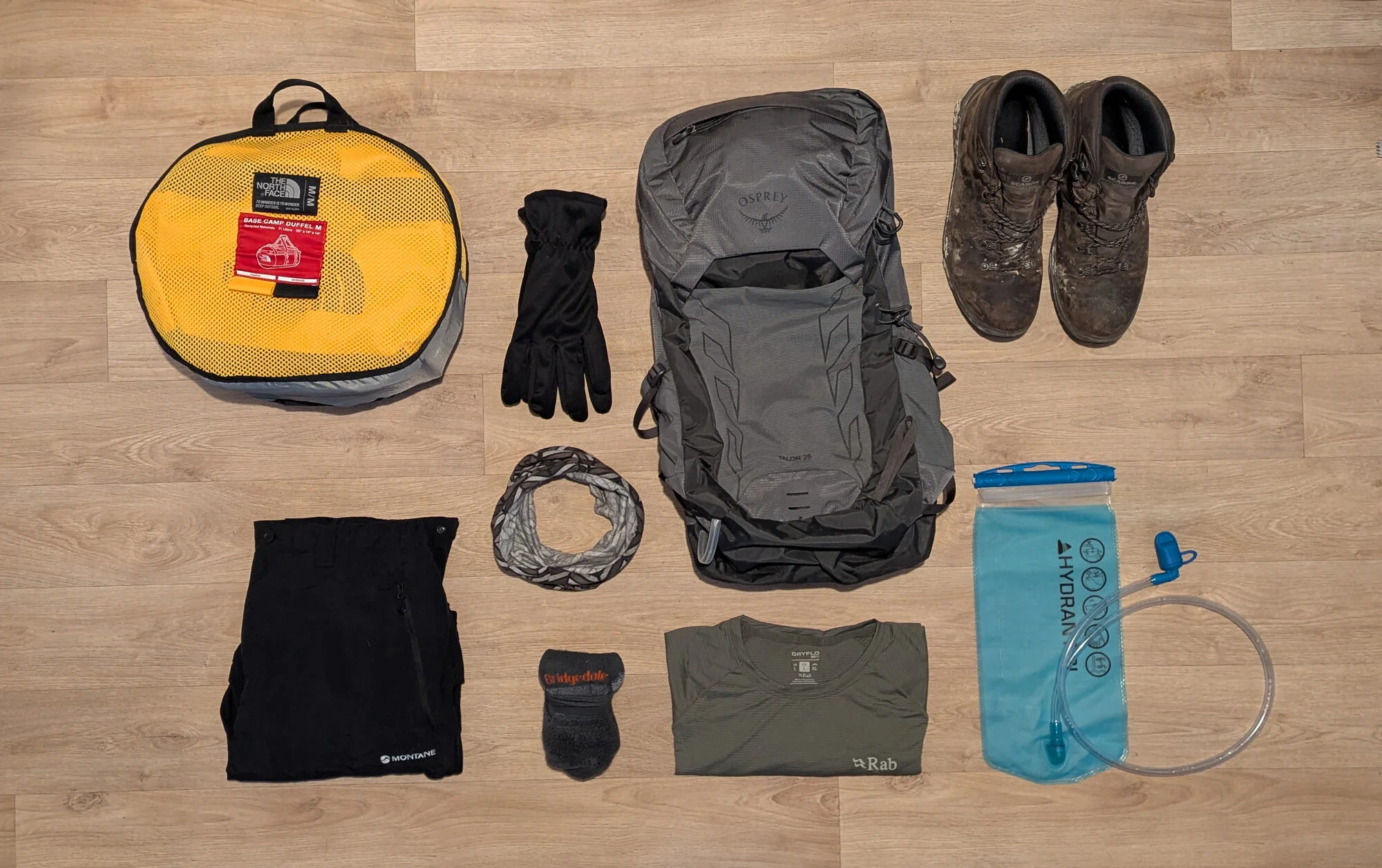
The items I found most useful were:
- broken-in waterproof walking boots
- merino walking socks
- quick-drying tops
- two pairs of walking trousers
- warm and waterproof layers
- a buff or neck gaiter
- woolly hat and gloves
- 26-litre walking daypack
- two-litre hydration bladder
- power bank
- SPF sunscreen and SPF lip balm
- roll-on insect repellent
- comfortable shoes for after walking
- microfibre towel for the optional hot springs
The thing I most regretted forgetting was a head torch.
The things I needed least were the book I left in storage and the large number of cereal bars I bought in Cusco.
Understanding the Three-Bag Luggage System
The most important thing to understand before packing is that I did not carry my main holiday luggage along the trail.
I effectively used three different bags.
| Bag | Purpose | What happened to it |
|---|---|---|
| North Face Basecamp Duffel Medium | Main luggage for the complete Peru trip | Placed in storage during the trek |
| Operator-issued black duffle | Clothing and personal items needed at the accommodation | Carried between stops by pack animals, with a 6 kg limit |
| Osprey Talon 26 | Water, layers, camera and anything needed while walking | Carried by me every day |
My main yellow North Face Basecamp Duffel Bag worked as my suitcase for the whole holiday.
Everything fitted inside it for the journey to Peru, including my Osprey daypack. When we started the trek, the yellow duffel went into storage with my laptop, book, spare clothing and anything else I would not need until after Machu Picchu.
The trekking company then gave each walker a numbered black duffle with a 6 kg limit. That travelled between the accommodation and held my spare walking clothes, underwear, wash kit and running shoes.
My daypack stayed with me throughout each walking day.

Why My Hand Luggage Mattered
I also carried a smaller rucksack on the flights and while exploring Cusco.
I kept my camera, phone, laptop and other important electronics with me rather than putting them in the aircraft hold.
That proved to be a good decision because my checked yellow duffel did not arrive in Cusco with me after our connection in Colombia.
Airport staff helped me report the missing bag, and it arrived the following day on the next relevant flight from Colombia. Having my phone and eSIM made dealing with the delayed bag much easier, while my camera and laptop had remained safely with me.
I would therefore keep essential travel documents, electronics and anything I could not easily replace in my hand luggage again.
The Clothing I Packed for the Trek
Inside the 6 kg trek duffle, I packed:
- two pairs of walking trousers
- three Rab walking tops
- five pairs of Bridgedale walking socks
- five pairs of underwear
- running shoes for evenings and lighter walking
- wash kit and personal-care items
- microfibre towel
- spare layers needed at the accommodation
I kept an additional clean set of clothing in my main luggage in storage. That meant I had something fresh waiting for me when we finished Machu Picchu and returned to the hotel.
Walking Tops
I took three Rab tops and alternated them throughout the trek:
I bought these at Cotswold Outdoor in Plymouth.
They worked well for me because they dried quickly and could be alternated across several walking days without filling the duffle with a separate top for every possible condition.
The long-sleeved versions also gave me more coverage from the sun.
These links, and the other product links in this article, are not affiliate links. They simply show the exact items I used.
Walking Trousers
I took two pairs of walking trousers:
I wore trousers every walking day.
Other people in our group regularly wore shorts, and some walkers we met looked dressed for a relaxed afternoon stroll. There is no single correct answer.
I generally prefer shorts, but chose trousers because I wanted more coverage from insects, dust and changing weather.
It did not rain during our trek, but that does not mean future walkers will have the same conditions.

Boots and Socks
My walking boots were Scarpa Men’s Terra II GORE-TEX Walking Boots.
I wore them regularly for around four weeks before travelling.
That gave me time to check the fit, get used to walking in them and avoid discovering a problem halfway up a mountain in Peru.
The boots remained comfortable throughout the trek. I noticed a few hot spots on the longest days, but they never developed into blisters.
I wore Bridgedale Men’s Hike Midweight Merino Endurance Boot Socks every day I wore the boots.
I packed five pairs, giving me a clean pair for each main trekking day.

Shoes for After Walking
I also packed a comfortable pair of running shoes.
These were useful around Cusco, at the accommodation and whenever I wanted to get out of my walking boots.
Other people took sliders, which would have been lighter and easy to slip on around camp. I did not take any and did not feel I particularly missed them, although that is a personal preference.
Warm and Waterproof Layers
I already owned a Berghaus Men’s Stormcloud Prime 3-in-1 Waterproof Jacket.
I used its layers to provide warmth and a waterproof outer when needed.
I also carried:
- baseball cap
- woolly hat
- Sealskinz gloves
- buff or neck gaiter
I mostly used the gloves on Days 1 and 2, when we were in the colder, higher sections around Humantay Lake and Salkantay Pass.
My hat, gloves and warm layer stayed in my daypack rather than the transported duffle. There would have been little benefit in owning them if they were travelling separately when the temperature dropped.

The Buff Became More Useful Than Expected
My buff was useful for warmth, but dust was where it really earned its place.
On Days 3 and 4, parts of the route ran close to roads and the railway. Passing vehicles could disturb dust, so pulling the buff over my mouth and nose made those sections more comfortable.
It was useful again at Rainbow Mountain, where wind could blow dust around the walking route.
This was a small, lightweight item that I would definitely pack again.

What I Carried in My Daypack
My walking bag was an Osprey Talon 26 Daypack.
The official list suggested a medium trekking backpack of around 15 to 25 litres. Mine was slightly larger at 26 litres, but it suited the amount I personally wanted to carry.
A typical daypack load included:
- waterproof jacket
- warm layer
- hat and gloves
- buff
- two litres of water
- snacks
- sunscreen and lip balm
- camera
- phone
- power bank
- small personal-care or first-aid items
Other walkers managed with smaller bags. The important factor for me was having enough room without needing to strap layers loosely to the outside whenever conditions changed.
Water and Hydration Bladder
I used a Vango 2L Hydration Bladder.
Being able to drink through the hose without stopping to remove a bottle made it easier for me to drink regularly while walking.
Our trekking company supplied boiled water for drinking. We had specifically checked this during the pre-trek briefing, so the water-treatment tablets I packed stayed unused.
That was the arrangement on our particular organised trek. I would still check directly with the operator rather than assume every trip supplies water in the same way.
Camera and Electronics
I deliberately left my usual Nikon Z8 at home and took a smaller Lumix G100.
I wanted a camera capable of documenting the trip without adding the weight of my normal professional setup.
My electronics included:
- Lumix G100 camera
- phone
- power bank
- phone charger
- watch charger
- travel adaptor
My laptop stayed in storage throughout the trek.
Power was available throughout the day at most of our accommodation. The exception was the remote first Sky Camp, where charging was limited to roughly 5pm to 8pm during our stay.
The power bank was especially valuable there because I was keeping both my phone and camera charged.
I will cover the photography choices in more detail in a separate camera article. For the complete photographic journey, see my Salkantay Trek to Machu Picchu guide.
Trekking Poles: Useful, but Not for Me
The trekking company supplied trekking poles.
I used them once on Day 1 because they had been issued to me, but I do not normally walk with poles and never settled into using them.
From Day 2 onwards, I strapped them to the outside of the Osprey and carried them until I returned them at the end.
Other people in the group used their poles every day and found them helpful on both climbs and descents.
I would therefore treat trekking poles as personal preference. If you normally use them, you will probably want them. If you have never used them, practising before the trek may be more useful than learning on the first morning.
Personal Care and First-Aid Kit
My personal kit included:
- paracetamol
- Sudafed
- cold and flu tablets
- hayfever tablets
- Compeed
- plasters
- SPF50 sunscreen
- SPF lip balm
- roll-on insect repellent
- personal toiletries
These were items I chose for myself, not medical recommendations for other walkers.
Anyone travelling should consider their own health, existing medication and appropriate professional guidance rather than copying somebody else’s medicine bag.
I did not need the plasters or Compeed because the hot spots from my boots never became blisters.
The SPF lip balm was particularly useful because my lips became dry when I was breathing heavily through my mouth.
I chose roll-on insect repellent because I found it easier to control than a spray. I was still bitten in the jungle, although not as much as some other walkers.
Towel, Swimming Kit and the Hot Springs
I packed a microfibre towel and used it for the optional hot-springs visit.
During our trip, towels could also be hired there for around 5 soles. That was the price I encountered in October 2026 rather than a guaranteed current charge.
Towels were provided at some accommodation, including the Jungle Domes, so I did not need my own towel every day.
If you plan to visit the hot springs, remember suitable swimming clothing as well.
The Head Torch I Forgot
The official kit list included a flashlight, and this is one recommendation I should have followed more carefully.
I forgot my head torch.
My phone torch was an acceptable backup, but it meant carrying my phone while walking to the communal toilets at the first Sky Camp during the night.
A proper head torch would have left both hands free.
This is probably the clearest item I would add next time.
Snacks: I Packed Too Many
I bought cereal bars from a supermarket in Cusco before the trek.
I bought far too many.
The trekking company also provided daily snack bags, and I hardly touched many of the bars I had carried.
I also packed Berocca as part of my personal supplies. Other walkers may make different choices about drinks, supplements or energy products, but none should be treated as medically necessary based on my experience.
Next time, I would first check exactly what snacks the operator supplies and then buy a smaller number of extras I knew I would genuinely eat.
How My Kit Compared with the Official List
The official list supplied for our trek covered the following broad areas:
| Official category | How it worked for me |
|---|---|
| Passport, money and personal medication | Carried securely, with cash useful on the trail |
| Water bottle or hydration system | Used a 2L hydration bladder |
| Sunscreen and insect repellent | Used SPF50 and roll-on repellent; follow your operator’s current guidance |
| Walking boots and lighter footwear | Scarpa boots plus running shoes |
| Walking trousers, socks and layers | Two trousers, five sock pairs and three Rab tops |
| Waterproofs and warm clothing | Berghaus jacket, woolly hat and gloves |
| Sun hat, buff and sunglasses | Cap and buff were particularly useful |
| Sleeping bag | Supplied as part of our selected trek |
| Trekking poles | Supplied by the operator |
| Medium walking backpack | Used a 26L Osprey Talon |
| Camera, charger and power bank | Carried in my daypack |
| Swimwear and towel | Used for the optional hot springs |
| Flashlight or head torch | Forgotten; I would take one next time |
Exactly what is supplied can depend on the operator and trek package. I would confirm sleeping bags, poles, duffle limits and drinking-water arrangements before travelling.
What I Would Pack Again
Without hesitation, I would take:
- broken-in walking boots
- Bridgedale merino socks
- three quick-drying tops
- two pairs of walking trousers
- running shoes
- Osprey daypack
- two-litre hydration bladder
- power bank
- buff
- woolly hat and gloves
- waterproof layers
- sunscreen and SPF lip balm
- roll-on insect repellent
- small camera
- microfibre towel if visiting the hot springs
What I Would Leave Behind or Reduce
I would change:
- The book: it stayed in storage and I never found time to read.
- Excess cereal bars: the supplied snack bags meant I carried more than I needed.
- Laptop on the trek: I correctly left it in storage and would do so again.
- Too much spare holiday clothing: keep post-trek clothes in stored luggage rather than using your 6 kg allowance.
What I Would Add Next Time
The main addition would be:
- a proper head torch
I would also review the operator’s current inclusions before shopping. There is little value in buying or carrying equipment already included in the trek package.
My Final Packing Advice
The best Salkantay Trek packing list is not necessarily the one containing the most equipment.
For me, the key was understanding where everything would be during the day.
Anything I needed while walking went in the daypack.
Anything needed at the next accommodation went in the 6 kg duffle.
Anything only needed before or after the trek stayed in my stored luggage.
That simple division stopped me carrying unnecessary weight and made it easier to find what I needed.
My clothing choices will not suit everyone. Some people walked in shorts, others used poles every day, and some carried smaller rucksacks.
Pack for the conditions your operator advises, your own comfort and the way you normally walk.
Most importantly, test your boots and key equipment before flying to Peru.
A four-week-old pair of properly broken-in boots proved far more useful to me than any last-minute item added to the bag.
Read more about the complete journey:
Salkantay Trek to Machu Picchu: My Honest First-Hand Guide
Find out why our group took on the challenge:
About Mike Lister
A Devon-based photographer specialising in weddings, commercial work, and drone photography. With years of experience capturing life's most important moments, Mike brings warmth, professionalism, and artistic vision to every project.
Learn more about Mike