Rainbow Mountain After the Salkantay Trek: Is It Worth It?
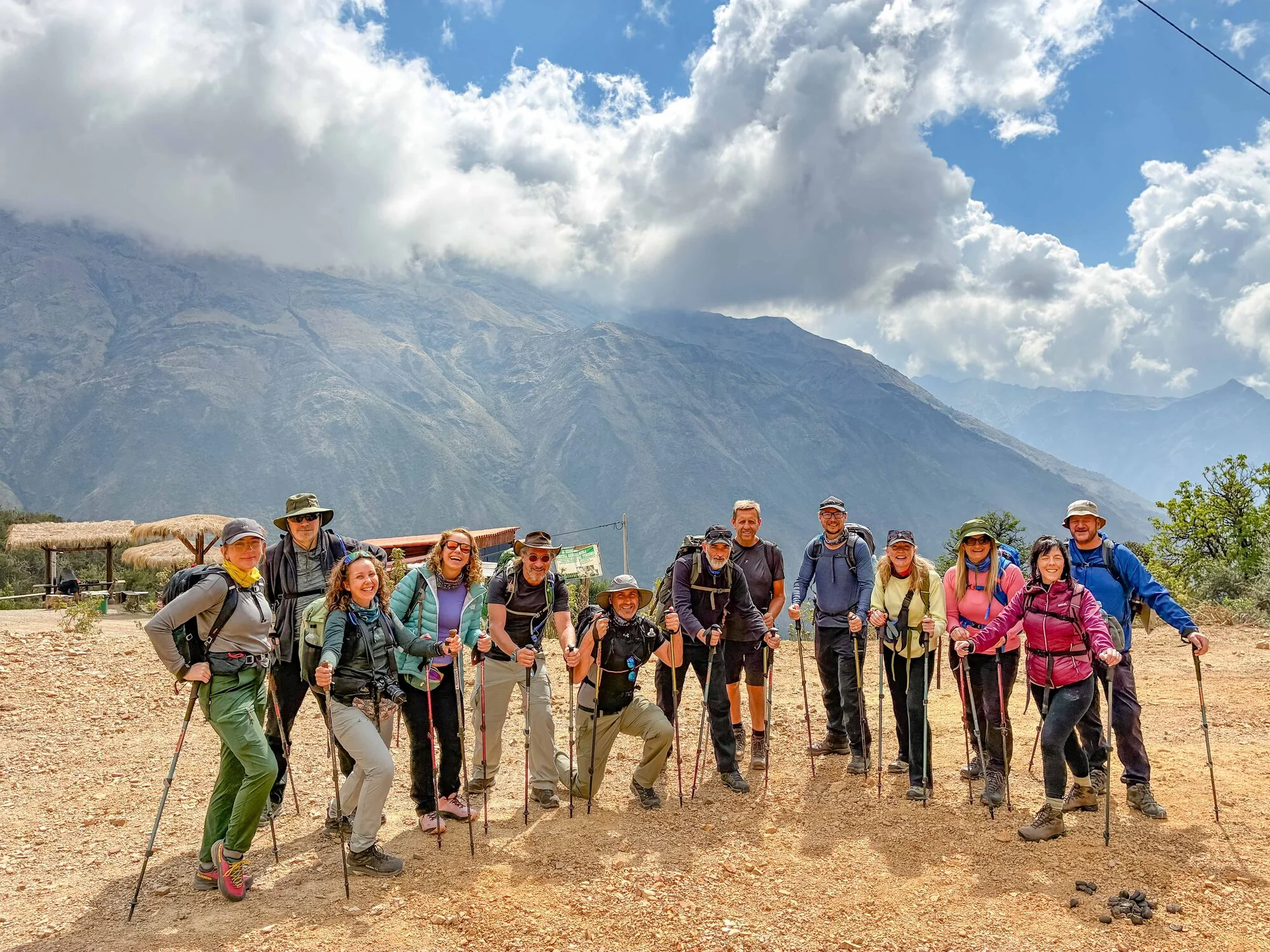
After five days walking the Salkantay Trek to Machu Picchu, the sensible thing would probably have been to have a lie-in.
Instead, at 4.20am on Wednesday 14 October 2026, we left our hotel for another high-altitude adventure.
Rainbow Mountain.
I’d already crossed Salkantay Pass at 4,630 metres, walked more than 25 km on our longest day and finally reached Machu Picchu.
Surely one more mountain couldn’t be that difficult?
It was.
Rainbow Mountain was one of the most challenging walks of my entire Peru trip.
But was it worth adding immediately after the Salkantay Trek?
For me, yes, although I’d go into it knowing that this isn’t necessarily an easy sightseeing day at the end of your holiday.
This is what my experience was really like.
If you’re planning the Salkantay route itself, start with my:
Salkantay Trek to Machu Picchu: My Honest First-Hand Guide
Why We Added Rainbow Mountain
Rainbow Mountain wasn’t part of our five-day Salkantay route.
We’d completed the main trek and visited Machu Picchu on Tuesday 13 October.
Rainbow Mountain was an additional day trip on Wednesday 14 October, before we started the journey home the following day.
It seemed like a good opportunity.
We were already in Peru.
We’d travelled a very long way from Plymouth.
And Rainbow Mountain was somewhere several of us wanted to see.
The slight flaw in that logic was forgetting that we’d already spent five days walking through the Andes.
Another 4.20am Start
Our day started at around 4.20am, when we left the hotel.
By this point, early alarms had become a fairly normal part of the trip.
We travelled for roughly two hours before reaching our first stop for breakfast.
Breakfast was buffet-style in a large canteen alongside plenty of other people heading towards Rainbow Mountain.
After eating, we continued towards the start of the walk.

The Altitude Hits You Immediately
One of the biggest differences between Rainbow Mountain and the Salkantay Trek was how quickly I noticed the altitude.
On Salkantay, we’d spent several days walking and gradually moving through different elevations.
At Rainbow Mountain, we arrived by vehicle already very high in the Andes.
When I stepped out at the car park, the thin air was immediately noticeable to me.
Our guide gave us a briefing before we started and explained that anyone feeling unwell should tell them and follow their instructions.
I had already experienced how differently my body could feel at altitude during the trip, so I wasn’t interested in trying to walk quickly.
This article describes my personal experience rather than medical advice. Anyone planning high-altitude travel should use appropriate professional travel-health guidance and follow the instructions of their guides.
Can You Take a Horse Up Rainbow Mountain?
Yes, there were alternatives available during our visit.
The options we were offered were approximately:
- 80 soles for a horse
- 82 soles for a motorbike
Prices and arrangements can change, so these are simply the figures from our October 2026 visit.
Neither option took you completely to the viewpoint.
There was still roughly 15 minutes of walking at the end.
I decided to walk the whole route.
There were moments when the horse looked like an increasingly attractive idea.
Walking Rainbow Mountain After Salkantay
I found the walk very challenging.
Part of that was the altitude.
Part of it was probably the fact that my legs had already spent five days walking to Machu Picchu.
And part of it was simply tiredness from another very early start.
I took my time.
There was no prize for reaching the top first.

One thing that helped was having a camera with me.
Stopping to photograph the surrounding mountains gave me a reason to slow down and actually look at the landscape rather than becoming completely focused on reaching the viewpoint.
The Surrounding Mountains Surprised Me
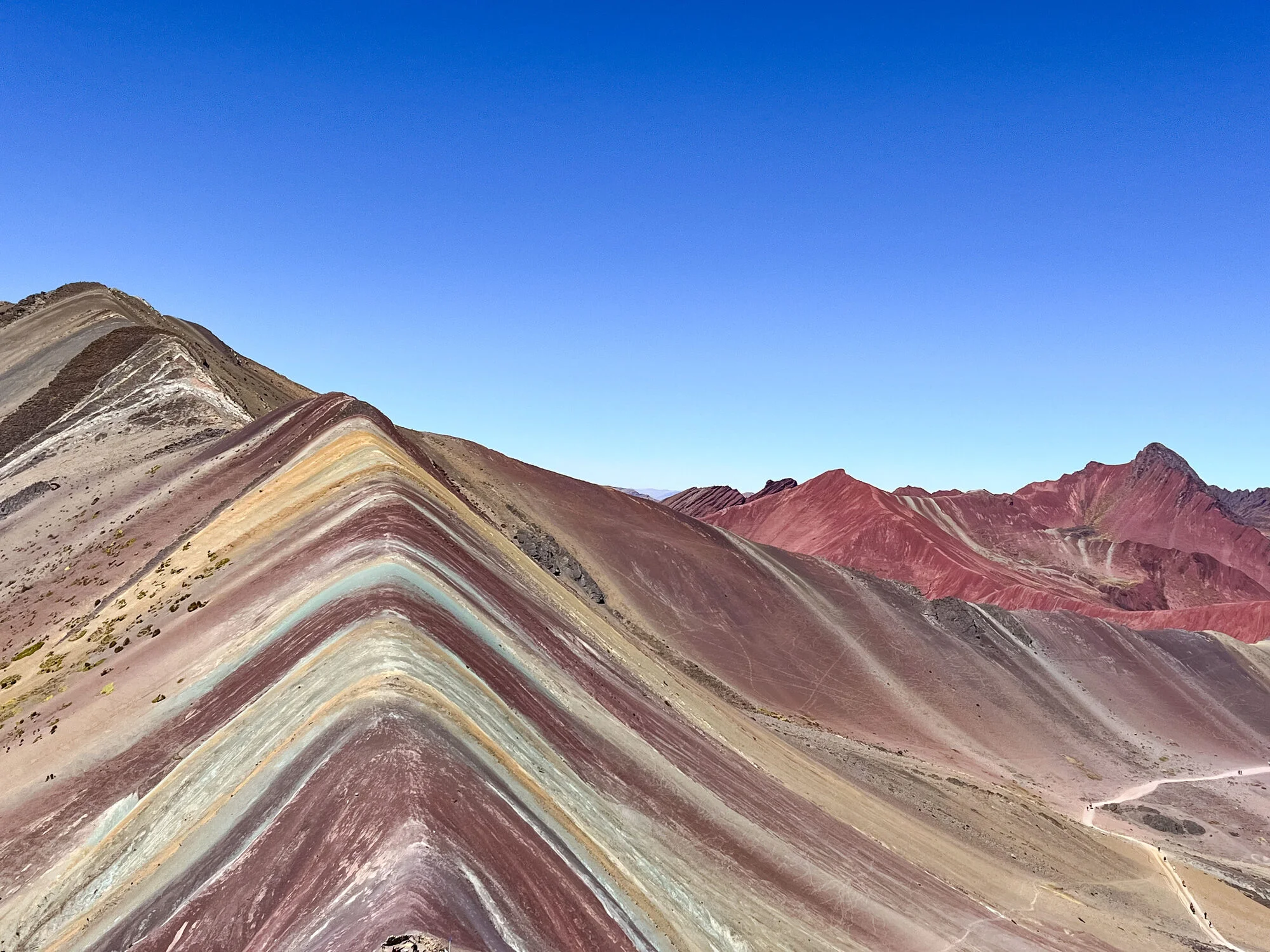
Rainbow Mountain is obviously famous for its coloured ridges.
But some of my favourite views weren’t necessarily of Rainbow Mountain itself.
The surrounding landscape was spectacular.
There was snow on the higher mountains and huge open views across the Andes.

As a photographer, I found myself looking in every direction rather than concentrating solely on the famous viewpoint.
That’s something I’d recommend generally when visiting somewhere you’ve seen hundreds of times online.
Don’t become so focused on recreating the photograph everybody else has taken that you forget to look behind you.
Reaching Rainbow Mountain
Eventually I reached the top.
After the Salkantay Trek, Machu Picchu and several days of early starts, it felt like one final achievement before heading home.
Was I tired?
Absolutely.
Was I glad I’d walked it?
Also yes.
Is Rainbow Mountain Harder Than Salkantay Pass?
For me, they were difficult in different ways.
Salkantay Pass
The Salkantay Pass day involved a long sustained trek.
We started walking at around 6am, reached the 4,630-metre pass at approximately 9.30am and then had a long descent before reaching our accommodation at around 4.55pm.
It was a complete day in the mountains.
Rainbow Mountain
Rainbow Mountain was a shorter experience, but I noticed the altitude immediately after arriving.
I was also attempting it after five days of trekking.
So although it wasn’t comparable with Day 2 in terms of the length of the walking day, I personally found the climb extremely demanding.
I wouldn’t choose one as universally ‘harder’ because people’s experiences will differ.
For me, Rainbow Mountain felt harder than I’d expected.
Should You Do Rainbow Mountain Straight After Salkantay?
This was the big question for me.
And my answer is:
I’m glad I did.
But I wouldn’t automatically recommend that everybody should do the same.
By the end of the Salkantay Trek, some people will be tired, sore or simply ready for a day doing absolutely nothing.
Rainbow Mountain means:
- another very early start
- more travelling
- another high-altitude walk
- more time on tired legs
If you’re feeling good and want to make the most of being in Peru, it can be a fantastic final adventure.
If your body is telling you that five days of trekking was enough, there’s nothing wrong with listening to it.
Horse, Motorbike or Walking?
Before travelling, I might have thought using a horse or motorbike somehow meant you hadn’t properly completed the experience.
After spending a week in the Andes, I didn’t think that at all.
People experience altitude, tiredness and physical challenges differently.
The important thing is making sensible decisions for yourself and following the guidance you’re given locally.
I chose to walk.
Somebody else might make a different decision.
Both can still stand at Rainbow Mountain and enjoy the experience.
What Camera Did I Take to Rainbow Mountain?
I used the same Lumix G100 I’d carried throughout the Salkantay Trek.
I’d deliberately left my normal Nikon Z8 at home because I didn’t want the additional weight of my usual professional setup.
By Day 6, I was particularly pleased with that decision.
When you’re tired and walking at altitude, even relatively small differences in what you’re carrying start to matter.

The smaller camera meant I could keep it accessible rather than burying it inside my rucksack.
That mattered because some of my favourite photographs came from simply stopping during the walk and photographing the mountains around me.
What I’d Do Differently
There isn’t much I’d change about the Rainbow Mountain day itself.
The biggest thing would simply be adjusting my expectations.
I’d thought of it as an additional excursion after completing the main trek.
In reality, it felt like Day 6 of the adventure.
I would therefore treat it as another proper walking day rather than a relaxed sightseeing trip.
I’d also make sure everything I needed was easily accessible in my daypack so I wasn’t constantly stopping to reorganise equipment.
What I’d Take
Based purely on my own experience, the things I was pleased to have available included:
- warm layers
- hat and gloves
- waterproof outer layer
- water
- snacks
- sun protection
- camera
- power bank
Conditions in mountain environments can change, so what I used on my particular October visit shouldn’t replace checking current conditions and guidance before travelling.
Is Rainbow Mountain Worth Visiting?
For me, yes.
But perhaps not for the reason I expected.
Of course, seeing Rainbow Mountain itself was part of it.
But I enjoyed the wider landscape just as much.
The snow-covered mountains.
The scale of the Andes.
The people making their way along the trail.
And the satisfaction of completing one final challenge before heading home.
It also gave the trip a natural ending.
We’d started with three days acclimatising in Cusco.
Walked the Salkantay route.
Reached Machu Picchu.
And then finished high in the Andes at Rainbow Mountain.
The following afternoon, 15 October, we started our journey home, eventually arriving back in the UK on 16 October.
My Verdict: Rainbow Mountain After Salkantay
If you asked me whether I’d add Rainbow Mountain after the Salkantay Trek again, my answer would be:
Yes, if I was feeling physically up to it.
I wouldn’t treat it as an essential part of the Salkantay experience because it isn’t part of the main route.
And I wouldn’t book it assuming it will be an easy final day.
But if you’ve travelled all the way to Peru, still have some energy left and want one final adventure in the Andes, I’m very glad I did it.
Just don’t expect much of a lie-in.
Read the complete journey:
Salkantay Trek to Machu Picchu: My Honest First-Hand Guide
Or find out why we travelled to Peru in the first place:
About Mike Lister
A Devon-based photographer specialising in weddings, commercial work, and drone photography. With years of experience capturing life's most important moments, Mike brings warmth, professionalism, and artistic vision to every project.
Learn more about Mike