Salkantay Trek Days 1 & 2: Humantay Lake and Salkantay Pass
The first two days of the Salkantay Trek were the part of the journey I was most nervous about before travelling to Peru.
They included Humantay Lake, our first night high in the Andes and then the climb to Salkantay Pass at 4,630 metres, the highest point of our five-day route to Machu Picchu.
I’d spent around three months preparing at home in Plymouth, deliberately finding hills to walk and getting used to my new walking boots.
What I couldn’t prepare for was the altitude.
These first two days were where I discovered what walking at more than 4,000 metres actually felt like, what the accommodation was really like and whether all those training walks around Devon had been enough.
This is my first-hand experience from 9 and 10 October 2026.
If you’re looking for the complete route rather than just these first two days, I’ve written a separate guide covering the whole journey.
Read my complete Salkantay Trek to Machu Picchu guide.
Before We Started: Acclimatising in Cusco
We’d deliberately allowed three days in Cusco before starting the trek.
I’m glad we did.
I didn’t feel particularly well when we first arrived. I had a headache, nausea and generally felt the effects of suddenly being somewhere considerably higher than Plymouth.
It took around 12 hours before I started feeling more like myself.
We spent the next few days exploring Cusco at a fairly relaxed pace rather than trying to fit in as much sightseeing as possible.
Even walking up the steps towards San Blas Viewpoint gave me an early indication that walking at altitude was going to feel different.
By Thursday evening, our guides Fredy and Pedro had arrived at the hotel for our final briefing.
They explained the route, equipment, food, cash, tipping and how our luggage would work.
The following morning it was time to start walking.
Day 1: Cusco to Soraypampa
Friday 9 October 2026
Our alarms went off early.
We left the hotel at around 5am, taking our main suitcases to a storage facility where they would remain while we were on the trek.
From there we travelled to breakfast, arriving at around 6.55am.
By 8.37am, we were at the start of the trail and ready to walk.
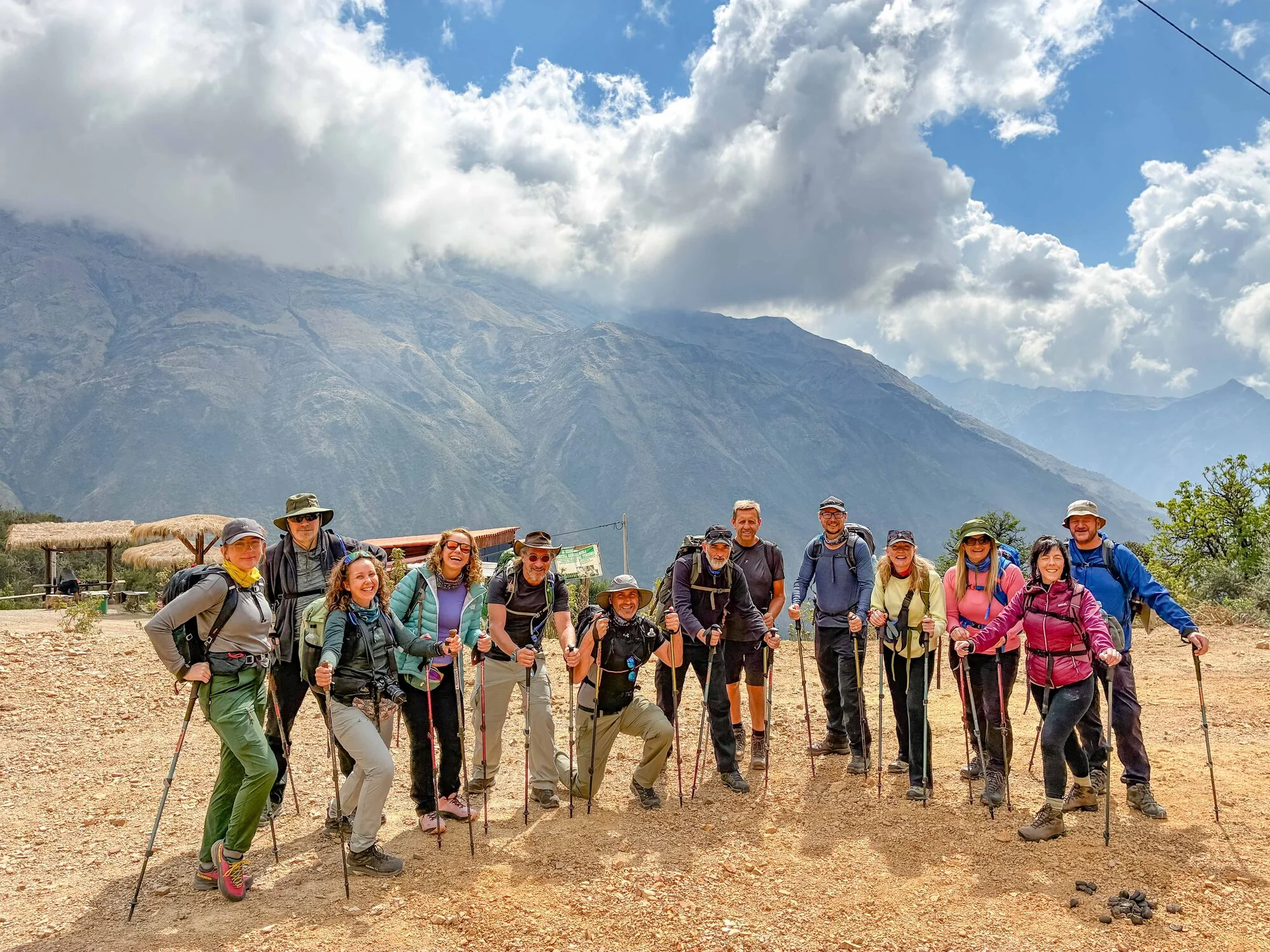
There were other trekking groups setting off around us, so after several days of travelling and acclimatising there was suddenly a real sense that the adventure had started.
Our destination for the first part of the day was Soraypampa and Sky Camp.
The itinerary supplied to us showed approximately 10 km of walking on Day 1, with the highest point reaching around 4,200 metres.
We arrived at Sky Camp at approximately 12.15pm.
And I was impressed.
What Was Sky Camp Really Like?
Before travelling, I’d prepared myself for fairly basic trekking accommodation.
Sky Camp was considerably better than I’d expected.
The individual domes sat beneath the surrounding mountains and gave us somewhere to leave our things, eat and recover before the afternoon walk.

The location was fantastic.
It was also remote enough that electricity worked differently from the other accommodation we used during the trek.
At Sky Camp, power was available between approximately 5pm and 8pm.
That made my power bank particularly useful because I had both my phone and camera to keep charged.
At the other accommodation we stayed in, electricity was available throughout the day, so this was really a Sky Camp issue rather than something we experienced for the whole trek.
After lunch, however, charging cameras wasn’t the immediate concern.
We still had Humantay Lake to climb to.
Walking to Humantay Lake
I knew Humantay Lake was going to involve another climb.
What I hadn’t appreciated was how much the surface would affect me.
The combination of altitude, uphill walking and loose shale made this one of the hardest sections of the entire week.
The rocks moved underneath your boots, so rather than simply settling into a steady walking rhythm, I found myself concentrating on where I was putting each foot.

There were plenty of moments where stopping for a photograph also provided a very convenient excuse to catch my breath.
Eventually we reached the lake.

This was one of the first moments where the scale of the Andes really hit me.
Photographs can show the mountains and the colour of the water, but they don’t really communicate what it feels like to have walked up there yourself.
The effort required to reach it became part of the experience.
The First Night Was Cold
Back at Sky Camp, the temperature dropped considerably once the sun disappeared.
The domes gave us fantastic views of the southern hemisphere stars, but they were cold.
Very cold.
I had a sleeping bag, liner and additional blanket and could still feel the temperature.
The following morning’s 4.30am wake-up wasn’t something I was particularly looking forward to.
Another practical lesson from that first night was the importance of a head torch.
The toilets were communal, which meant leaving the dome if you needed them during the night.
I’d forgotten my head torch and used my phone instead.
It worked, but trying to hold a phone while doing everything else isn’t ideal. If I walked the route again, a head torch would definitely be in my daypack.
Day 2: The Salkantay Pass
Saturday 10 October 2026
Our wake-up call came at 4.30am.
Breakfast was at 5am and by 6am we were walking.
Getting out of a warm sleeping bag into the freezing morning air was probably one of my least favourite moments of the entire trek.
Photographically, however, it became one of my favourites.
As the light started appearing, the snow-covered mountains began catching the sunrise.
The domes below them started to glow.

It was one of those occasions where I was very glad I’d made the effort to carry a camera.
Could You Take a Horse Up Salkantay Pass?
One thing I hadn’t fully appreciated before travelling was that there were alternatives available if somebody didn’t feel able to complete a particular section.
On our trek, horses were available for the Day 2 ascent for 120 soles.
Some members of our wider trekking group chose that option.
I decided to walk.
I think it’s worth knowing that using a horse for a section doesn’t necessarily mean your entire trek is over. Options existed throughout our journey depending on how people were feeling.
Prices and availability can change, so the 120 soles is simply what was available during our October 2026 trek.
The Climb to 4,630 Metres
The climb was challenging.
There wasn’t one dramatic moment where it suddenly became difficult. It was more about maintaining a steady pace as we continued gaining height.
I was conscious of the altitude, so I wasn’t interested in trying to race anybody.
The objective was simply to keep moving.
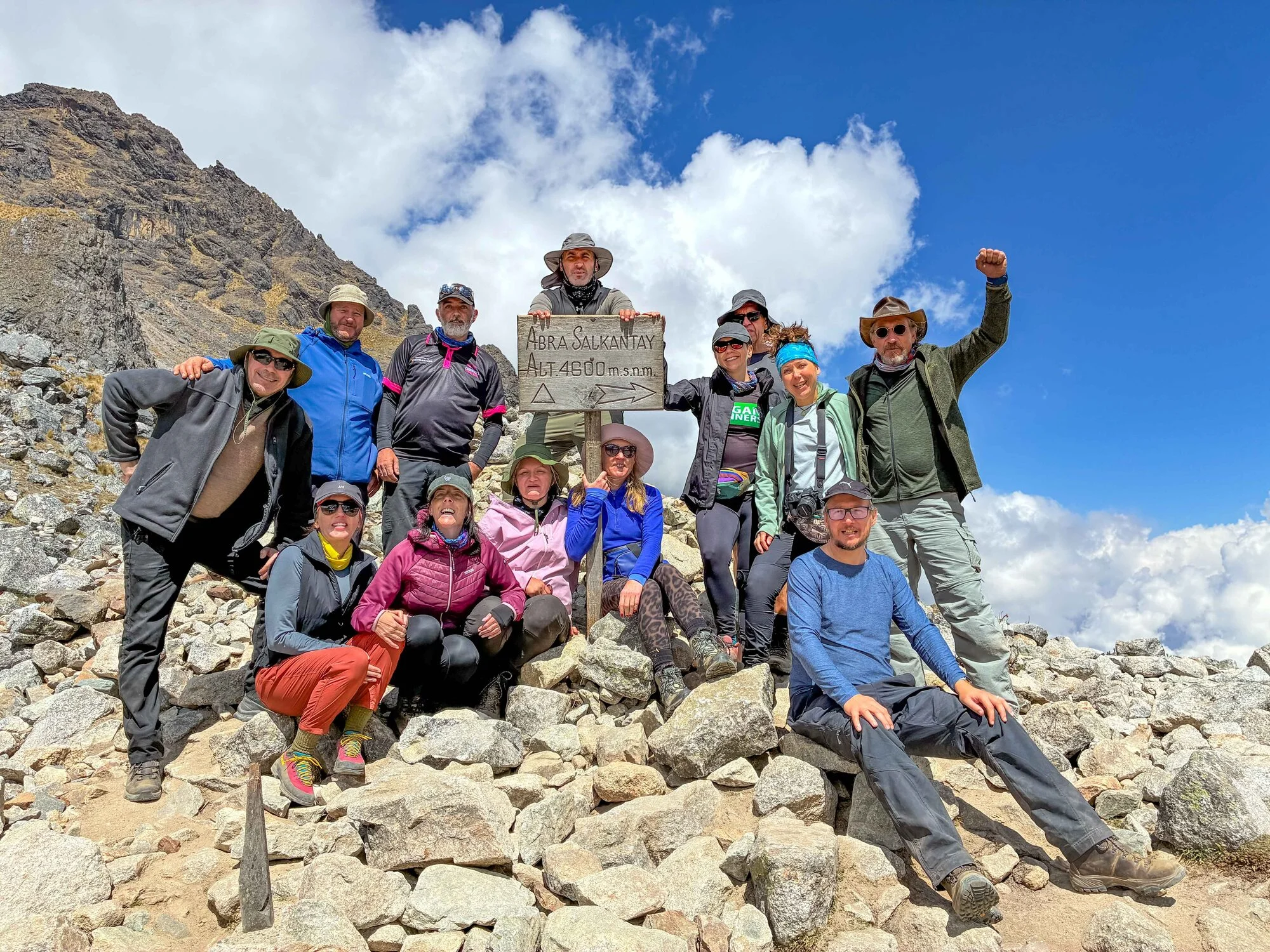
By around 9.30am, we’d reached Salkantay Pass.
At 4,630 metres, this was the highest point of our five-day route.
We regrouped at the top, had a drink and sandwich and took photographs.
After spending the previous few months wondering how I’d cope with the altitude, standing at the pass felt like a significant milestone.
I even had enough energy left to jump for a photograph.
What Happens After Salkantay Pass?
Reaching the pass isn’t the end of Day 2.
Far from it.
Our itinerary showed approximately 23.5 km of walking for the day, with an expected walking time of around 10 to 11 hours.
Once we’d finished at the pass, we started descending.
This became one of my favourite parts of the entire Salkantay Trek.
The landscape gradually changed around us.
The exposed mountain environment started disappearing and vegetation became increasingly noticeable.
Eventually we were heading into the cloud forest.

We stopped for lunch during the descent before continuing towards our next accommodation.
We finally arrived at around 4.55pm.
Considering we’d started walking at 6am, it had been a very long day.
Was Day 2 the Hardest Day?
Before the trek, I expected Salkantay Pass to be the hardest day.
It was certainly challenging, but looking back I wouldn’t automatically call it the hardest.
Day 4 was longer and harder on my legs, particularly during the descent.
The climb to Humantay Lake on Day 1 also surprised me because of the loose ground.
What made Day 2 different was the combination of:
- the 4.30am start
- cold temperatures
- sustained climbing
- reaching 4,630 metres
- a long descent
- almost an entire day on the trail
It was physically demanding, but it was also probably my favourite day.
What I’d Want to Know Before Days 1 and 2
If I was preparing for these first two days again, these are the things I’d want to know.
Don’t underestimate Humantay Lake
It’s easy to think of the lake as an afternoon excursion before the ‘real’ challenge of Salkantay Pass.
I found the climb harder than expected.
Keep warm clothing accessible
Don’t bury your hat, gloves or additional layer in the duffle bag being carried by the horses.
If you might need it during the day, keep it in your daypack.
Carry a power bank
Particularly for the first Sky Camp.
Take a head torch
Your phone can work as an emergency torch, but a head torch is considerably more practical.
Walk at your own pace
There were faster and slower walkers throughout the trek.
I quickly stopped worrying about what everybody else was doing.
Stop and look around
This sounds obvious, but when you’re concentrating on the next climb it’s surprisingly easy to forget.
Some of my favourite photographs and memories came from simply stopping and looking back.
Were the First Two Days Worth It?
Absolutely.
They were probably the two days that best matched what I’d imagined when I signed up for a trek through the Peruvian Andes.
Snow-covered mountains.
High-altitude trails.
Humantay Lake.
Freezing mornings.
Salkantay Pass.
And then the extraordinary transition from mountains into cloud forest.
They were difficult days, but they were also the days that made me feel like the adventure had properly begun.
If you’re planning the complete route, read my:
Salkantay Trek to Machu Picchu: My Honest First-Hand Guide
You can also read why our group took on the challenge:
About Mike Lister
A Devon-based photographer specialising in weddings, commercial work, and drone photography. With years of experience capturing life's most important moments, Mike brings warmth, professionalism, and artistic vision to every project.
Learn more about Mike